
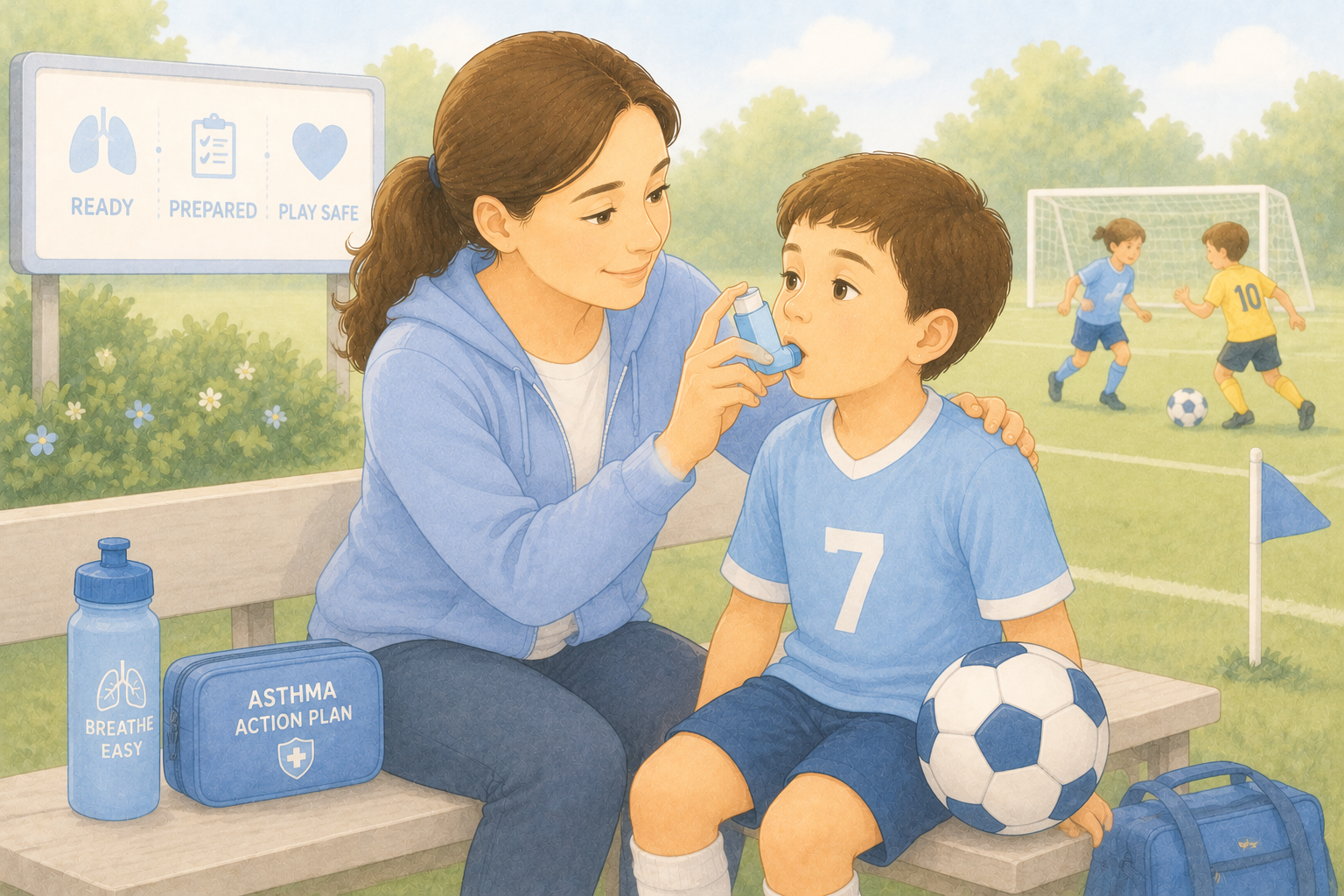
Managing asthma can be challenging, especially in active kids who love sports and outdoor activities. But with the right strategies and preparation, children with asthma can enjoy all the benefits of an outdoor sport, and our team here at Garland Pediatric Practice in Garland, Texas, led by Phani Bodavula, MD, can help with that.
Understanding pediatric asthma
Asthma is a respiratory condition characterized by inflammation of the airways. The coughing, wheezing, and chest tightness that come with an asthma attack affect millions of children in the United States. While it is a chronic condition, childhood asthma can be managed, even on the field, with routine care and a few practical guidelines.
Common symptoms include:
- A whistling or wheezing sound when exhaling
- Coughing or wheezing that worsens with a cold or the flu
- Shortness of breath
- Chest congestion
- Worsening symptoms with exercise that may disrupt play or sports
- Difficulty sleeping due to coughing or shortness of breath
Children with asthma also often experience delayed recovery or develop bronchitis after a cold or respiratory illness.
Tips for managing childhood asthma
Try incorporating these strategies to successfully manage childhood asthma and minimize its impact on game day.
1. Start with a medical evaluation
If you suspect your child may have asthma, schedule an appointment with Dr. Bodavula for a thorough asthma evaluation. If your child's current treatment isn't all you thought it would be, we're also happy to assess their asthma control.
- Bring a list of symptoms, suspected triggers, and any questions or concerns to review with Dr. Bodavula.
- Once treatment begins, follow the guidelines carefully and report any issues to our office.
Our team also provides education about asthma, potential triggers, and symptoms that are sometimes confused with other illnesses. For instance, asthma triggers include pollen, exercise, and respiratory infections, and we can help you identify patterns that indicate your child might be experiencing asthma along with a cold.
2. Follow the asthma action plan
Asthma treatment depends on several factors, including your child's age, the severity of the condition, and their symptoms. For instance:
- Asthma driven by allergies may require daily asthma medicine, a fast-acting inhaler for an unexpected attack, and allergy care.
- Exercise-induced asthma may require pretreatment before training or a game.
Customized to fit your child's needs, an asthma action plan outlines symptoms to watch for and step-by-step instructions for daily treatment and how to handle an asthma attack.
Make sure you and your child understand the plan and how to implement each step, including monitoring symptoms, taking daily medicines, and using a rescue inhaler at the first sign of symptoms, even in the middle of a game.
3. Inform your child
Be sure your child has a broad, age-appropriate understanding of asthma and how to follow their therapy. Educate them about recognizing asthma symptoms and the importance of reporting and treating them promptly.
For instance, make sure they understand how, when, and why to use their quick-acting (rescue) inhaler. Keeping the inhaler on hand throughout the day, at home, at school, and during sports, should be a priority.
4. Stay safe on the field
Keep an open line of communication with coaches and team staff about your child's asthma. Provide emergency contact information and ensure they know the asthma action plan and how to respond in an emergency.
We work with you and your child to develop a comprehensive strategy that coaches, teachers, and caregivers can implement to protect your child's respiratory health before, during, and after an asthma attack.
Key takeaways
- Asthma causes airway inflammation with symptoms like wheezing, coughing, shortness of breath, and chest congestion that can worsen with exercise.
- A thorough medical evaluation with Dr. Bodavula is the starting point for diagnosis and assessing asthma control.
- A customized asthma action plan guides daily treatment and how to respond to an attack, including using a rescue inhaler at the first sign of symptoms.
- Teaching your child to recognize symptoms and use their rescue inhaler, and keeping it on hand, supports safe activity.
- Sharing the action plan and emergency contacts with coaches and team staff helps keep your child safe on the field.
When to call us
If you suspect your child may have asthma, or if their current treatment isn't working as well as you hoped, schedule an appointment with Dr. Bodavula. Diagnosing and treating asthma is one of our specialties, and our team provides outstanding pediatric services from infancy through adolescence.