It's back to school days, and your to-do list probably seems endless. Taking a few precautions now can help your child manage allergies at school, limiting the discomfort that unexpected allergy flares can cause.
It can take time to settle into the daily routine of school, and it becomes even more challenging when your child has allergies. Whether it's a food allergy, environmental factors, or anything in between, ensuring your child's safety away from home is your top priority. With a little preparation and collaboration with school officials, Dr. Phani Bodavula and the team at Garland Pediatric Practice in Garland, Texas, are happy to share tips for creating an allergy-friendly school environment.
Allergy education is key
Before school starts, sit down with your child and discuss their allergies. Keep your review age-appropriate and serious without creating anxiety. Ask the Garland Pediatric Practice team to recommend books and brochures geared toward educating children about allergies.
Make sure your child understands:
- What causes their reactions
- The symptoms to watch for
- What to do if they experience signs of a reaction
Also reassure your child that their teachers, school nurse, and other adults at school are there to help during an allergic reaction.
Communicate with school staff
Schedule a conversation with your child's teacher, the school nurse, and possibly the principal to discuss your child's allergies.
Provide them with information such as:
- Details about the allergy
- Steps to take in case of a reaction
- Emergency contact details
- Permission forms for administering medicine
Update prescriptions at the start of the year, and make sure medications are available at school to be administered as directed during a reaction. If your child's allergy situation changes, ensure the school is informed immediately.
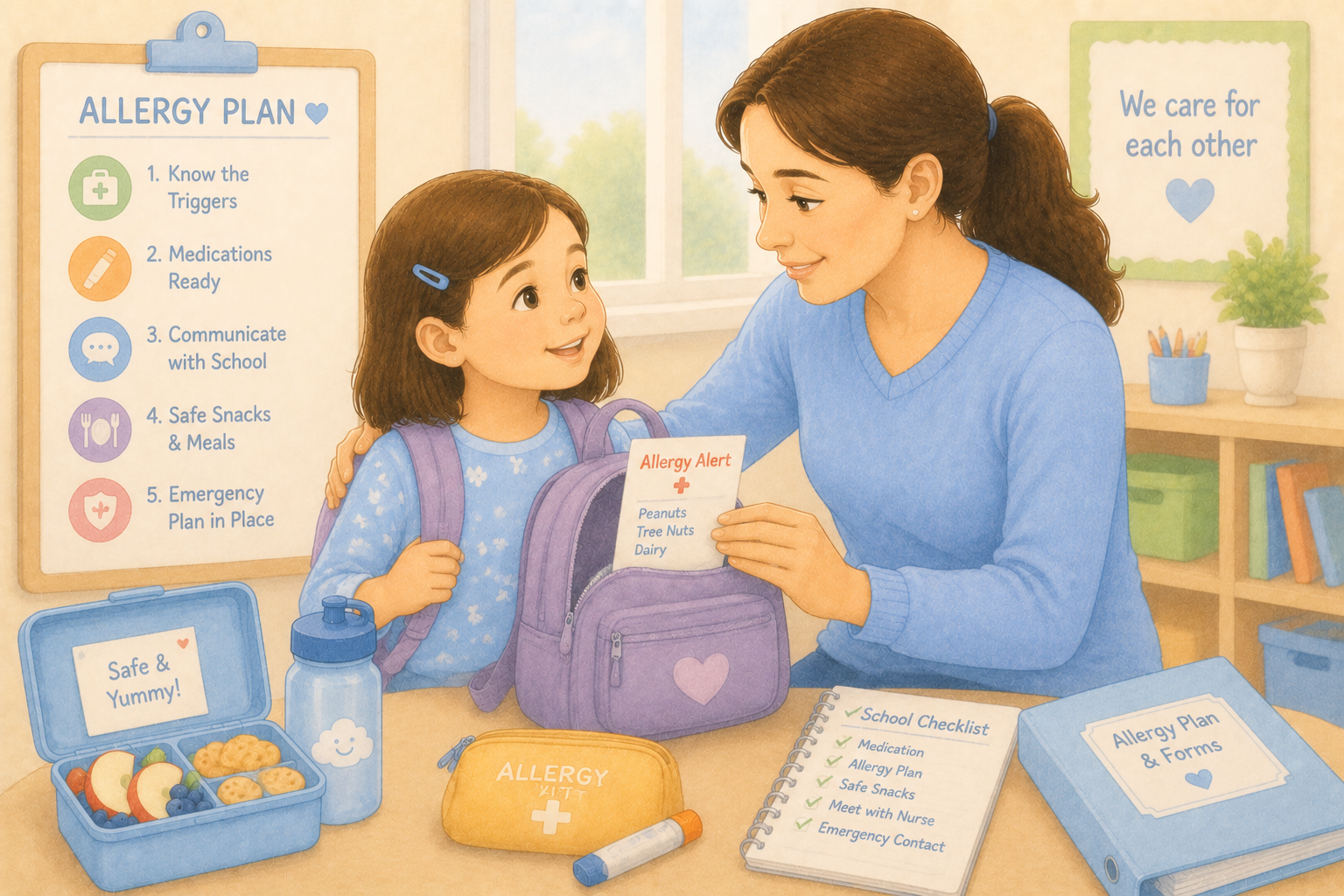
Have an allergy action plan
Create an allergy action plan in collaboration with Dr. Bodavula. This plan should include:
- A list of allergens
- Symptoms of a reaction
- Step-by-step instructions on how to treat a reaction
- Emergency contact details, including a second contact number if the first is unavailable
Make sure the school has a copy of this plan that's easily accessible to your child's teacher, nurse, and other staff.
Create a 'safe snack box'
If your child has food allergies, consider creating a safe snack box. Fill it with allergy-friendly snacks to enjoy when there's a celebration or an unplanned treat in class. Make sure your child knows where this box is kept, and refresh it as necessary.
Ensure access to medications
Ensure the school can access necessary medications, like antihistamines or epinephrine auto-injectors (EpiPen).
Discuss protocols with the school nurse regarding storage and administration. If permissible and age-appropriate, your child can also carry a dose with them. Make sure medications are available during class time, recess, and sports or other after-school activities.
Empower your child
Teach your child to:
- Check food labels
- Understand their allergy triggers
- Politely decline food if they're unsure about ingredients
- Advocate for themselves by informing adults when they feel something isn't right
Ensure your child understands that while allergies should be taken seriously, quick treatment reduces the risks of a severe reaction.
Key takeaways
- Teach your child about their allergies in an age-appropriate way so they recognize triggers, symptoms, and what to do during a reaction.
- Communicate clearly with your child's teacher, school nurse, and principal, and keep prescriptions and permission forms up to date.
- Work with Dr. Bodavula on a written allergy action plan that the school can easily access.
- Make sure medications like antihistamines and epinephrine auto-injectors are available throughout the school day, and consider a safe snack box for food allergies.
- Empower your child to read labels, decline uncertain food, and speak up when something isn't right.
When to call us
Schedule a visit with Dr. Bodavula at Garland Pediatric Practice for outstanding pediatric care, including testing and treatment for allergies and asthma. Call the office or request an appointment online.